React Native in 2025: A Strategic Deep Dive into its Evolving Landscape and Market Leadership
Executive Summary
In 2025, React Native solidifies its position as a dominant force in cross-platform mobile development, driven by its transformative New Architecture (Fabric, JSI, TurboModules) which significantly enhances performance and developer experience. While Flutter continues to be a strong contender, particularly for highly customized UIs and animations, and native development remains the gold standard for absolute performance, React Native offers a compelling balance of near-native performance, rapid development cycles, and extensive code reusability. Its deep integration with the vast JavaScript ecosystem, robust tooling (including Expo's advancements), and proven enterprise adoption by tech giants like Meta, Microsoft, and Amazon make it a strategic advantage for businesses seeking efficient multi-platform reach. The framework’s strong job market, competitive salaries, and continuous evolution with emerging technologies like AI/ML and WebAssembly underscore its enduring relevance and future potential.
1. Introduction: React Native's Enduring Relevance in the Modern App Economy
The mobile application landscape in 2025 is characterized by an increasing demand for rapid development, cost efficiency, and broad platform reach. Businesses are actively seeking frameworks that can deliver high-quality user experiences across iOS, Android, web, and desktop from a single codebase. This pursuit of efficiency and broad market penetration has placed cross-platform solutions at the forefront of strategic technology decisions.
React Native, initially launched by Facebook (now Meta) in 2015, has consistently evolved to meet these demands, leveraging the widespread popularity of JavaScript and the declarative power of React. Its core philosophy of "Learn once, write anywhere" remains highly relevant, enabling web developers to transition seamlessly into mobile development, effectively bridging the talent gap between web and mobile domains.This approach directly aligns with the fundamental business needs for agility and resource optimization. The framework’s continuous evolution, particularly the stabilization of its New Architecture, directly addresses critical business imperatives by enhancing performance, reducing development costs, and accelerating time-to-market. This commitment to addressing foundational challenges positions React Native not merely as a technical tool, but as a strategic asset for organizations aiming to maximize their digital product delivery.
In 2025, React Native is not just a viable option but a strategic choice, particularly with the stabilization of its New Architecture, which addresses previous performance bottlenecks and enhances native integration. This report will delve into the critical aspects that make React Native a compelling technology for the coming years, providing a comprehensive, data-backed analysis for technology and business leaders.
2. Performance Redefined: The Impact of React Native's New Architecture
2.1. Architectural Innovations: Fabric, JSI, and TurboModules
React Native's New Architecture, which is expected to stabilize fully in early 2025, represents a fundamental re-engineering designed to significantly improve performance, maintainability, and developer experience.This architectural overhaul addresses some of the long-standing criticisms related to the "bridge" that connected JavaScript to native modules. The shift from an asynchronous, serialized JSON bridge to a more direct communication mechanism fundamentally changes React Native's performance profile. This is not merely an incremental improvement; it is a strategic repositioning of the framework to tackle core historical limitations, enabling it to compete more directly with native performance and even surpass some aspects of Flutter's direct rendering model. This re-architecture is a clear signal of Meta's long-term commitment to the framework, aiming to future-proof it against increasingly demanding user expectations and complex application functionalities.
At the heart of this transformation are three key components:
- JSI (JavaScript Interface): This is a critical component that enables direct, synchronous calls between JavaScript and C++ (native code) without the overhead of the traditional JSON bridge.This direct memory access significantly reduces serialization and deserialization costs, leading to faster interactions and a more responsive user experience.The ability to bypass the bridge for certain operations means that the JavaScript and native layers can communicate with unprecedented efficiency.
- Fabric: As the new UI rendering system, Fabric enhances UI consistency and performance by optimizing rendering through batching updates and more efficient tree diffing.It works seamlessly with React's Concurrent Rendering capabilities, allowing the framework to prioritize updates and ensure smoother UI transitions, even during complex operations.This system aims to deliver a more predictable and consistent rendering pipeline, crucial for complex user interfaces.
- TurboModules: These replace the legacy Native Modules, offering a reimagined and more efficient way for JavaScript to communicate with native code. A key improvement is on-demand (lazy) loading, which significantly reduces app startup times and memory consumption by initializing modules only when they are actually needed. This contrasts sharply with the old architecture where all native modules were initialized at app startup, regardless of use. TurboModules also integrate tightly with TypeScript and Flow via Codegen, ensuring type safety and reducing runtime errors. The enhanced type safety and reduced runtime errors lead to more maintainable code and fewer bugs. This directly impacts development costs by reducing debugging time and improving overall efficiency. For organizations, this translates to a more predictable and streamlined development process, and for developers, a more robust and less error-prone coding environment, which can also aid in attracting and retaining talent.
- Codegen: This automatic code generation tool ensures type-safety and better developer ergonomics by automatically generating boilerplate code for TurboModules and components. This automation reduces manual errors and the amount of repetitive code developers need to write, further streamlining the development process.
2.2. Benchmarking Against Competitors: React Native vs. Flutter vs. Native
Performance benchmarks from early 2025 highlight the competitive landscape, showing React Native's significant advancements while also indicating areas where other frameworks may hold an edge.The following table provides a comparative overview of key performance metrics for leading cross-platform and native solutions.
Cross-Platform Mobile Performance Benchmarks (2025)
| Metric |
React Native (New Arch) |
Flutter (Impeller) |
Kotlin (Native/KMM) |
| App Startup Time (Cold) |
~850ms |
~620ms |
~410ms |
| UI Rendering Speed |
~58 FPS |
~60 FPS |
~60 FPS |
| Memory Usage |
Moderate |
Low-Moderate |
Low |
| Battery Efficiency |
Good |
Very Good |
Excellent |
| Complex Animation Performance |
Good |
Excellent |
Excellent |
The data indicates that while native development (Kotlin/KMM) generally maintains its lead in raw performance metrics such as app startup time, memory usage, and battery efficiency, React Native's new architecture has significantly narrowed the performance gap in UI rendering speed. For many standard business applications, the performance difference is no longer a prohibitive factor, allowing other considerations like development speed and ecosystem maturity to become primary differentiators. This shifts the decision-making process from a singular focus on raw performance to a more holistic evaluation of the optimal balance between performance, cost, and development velocity for a specific project.
Flutter's Impeller rendering engine (which is transitioning from Skia) provides direct control over the rendering pipeline, contributing to its strong animation performance and efficiency, often reaching 60-120 FPS animations. React Native has "closed the performance gap" with Hermes and Concurrent Rendering, making it capable of handling most performance-sensitive tasks, though Flutter retains a "slight edge" in raw speed for applications with heavy graphics. Kotlin Multiplatform Mobile (KMM) offers near-native performance on iOS, and Kotlin native applications continue to set the standard for Android performance.
This comparative analysis underscores the importance of a use case-specific selection process. For applications demanding heavy graphics, real-time updates, or high-demand scenarios like mobile games or multimedia applications, Flutter or a full-native approach might still be the preferred choice. Conversely, React Native continues to perform well for typical business applications that do not rely heavily on complex animations or intensive computational tasks. This highlights that no single framework is a universal solution; strategic technology selection must be deeply tied to the application's specific performance requirements and desired user experience goals.
2.3. Hermes Engine: Optimizing Runtime Efficiency
The Hermes JavaScript engine is a lightweight and optimized runtime specifically designed to boost React Native performance. Its integration represents a commitment to improving the underlying execution environment for React Native applications.
Hermes offers several key benefits that contribute to a more optimized and efficient application:
- Reduced App Size: It significantly shrinks the APK (Android Package Kit) and overall app bundle size, which is particularly advantageous for users with limited storage space or slower internet connections. A smaller app size translates directly to faster download times and a more accessible user experience.
- Faster Startup Time: Hermes optimizes the app's cold startup times, meaning the application launches more quickly from a completely closed state. This immediate responsiveness is crucial for user retention and satisfaction.
- Decreased Memory Usage: It lowers overall memory consumption during runtime, leading to a smoother and more responsive user experience, especially on lower-end devices. Efficient memory management also contributes to better battery efficiency.
The Hermes engine reduces reliance on the traditional JavaScript bridge, contributing to overall performance gains by optimizing how JavaScript code is executed and interacts with the native layers. This holistic approach to performance improvement, encompassing app size, startup time, and memory footprint, makes React Native more appealing for a wider range of devices and diverse user bases. It demonstrates a strategic focus on optimizing the entire app lifecycle, from initial download to sustained usage, thereby broadening React Native's competitive appeal.
3. Unlocking Developer Productivity and a Robust Ecosystem
3.1. Accelerated Development Cycles
React Native significantly speeds up the development process, making it a highly cost-effective choice for businesses aiming for rapid market entry and iterative product development. This acceleration is a critical competitive differentiator in today's fast-paced digital economy.
Key features contributing to this rapid development include:
- Hot Reload and Fast Refresh: This feature provides near-instant feedback for code changes, allowing developers to see updates in real-time without losing the application's state or requiring a full restart. While Flutter's Hot Reload applies these changes to the entire application, React Native's Fast Refresh primarily affects the UI, enabling developers to quickly tweak properties, styles, and rendering logic. This immediate visual feedback dramatically shortens the iteration cycle, allowing developers to concentrate on problem-solving and feature implementation rather than waiting for recompilations.
- Metro Bundler: The Metro bundler, an integral part of React Native, boasts impressive speed, offering 15 times faster resolution of modules. This efficiency in bundling code contributes directly to quicker build times and a smoother development workflow.
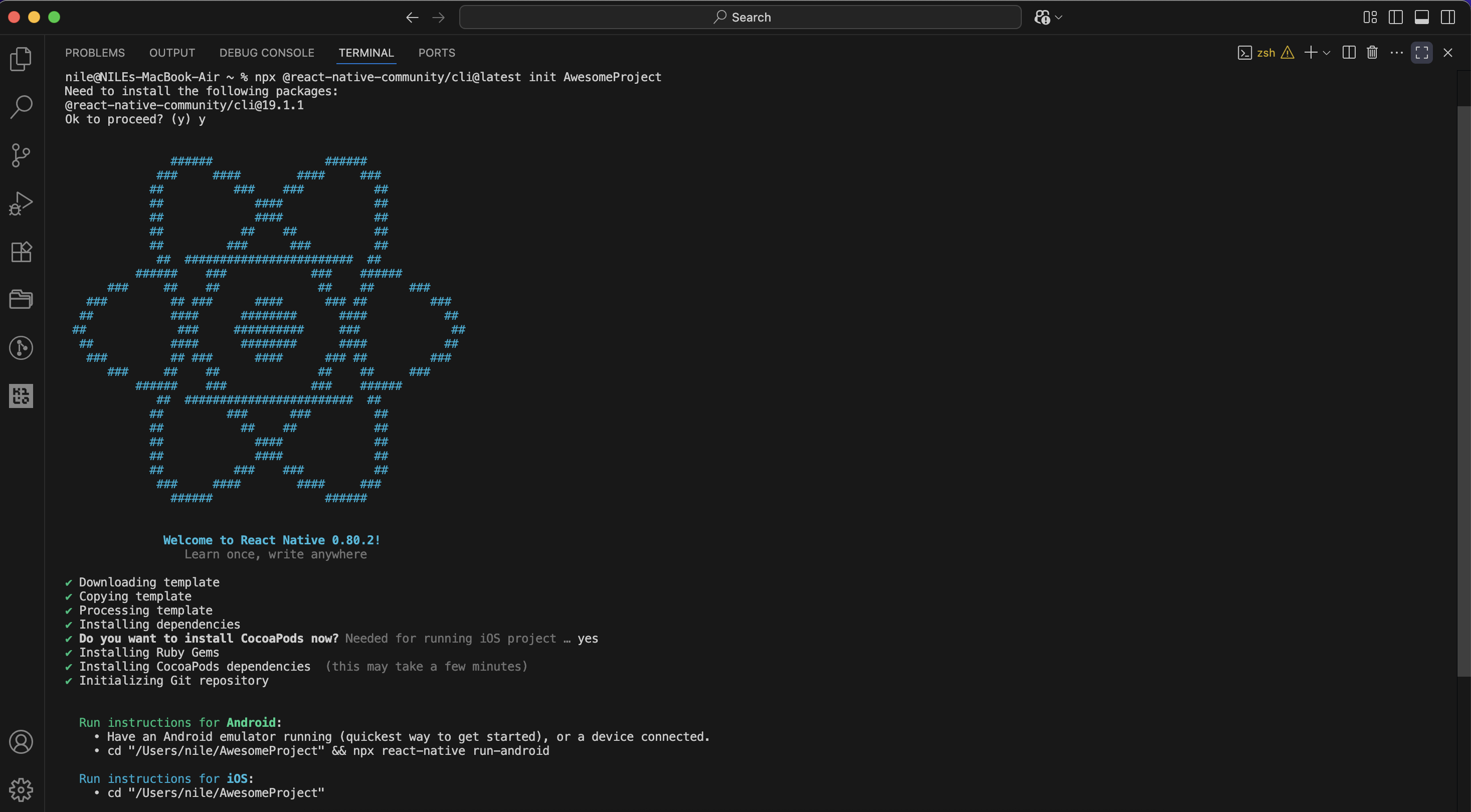
- Streamlined Development Setup: React Native generally offers a quicker initial setup, typically taking around 45 minutes, compared to Flutter's approximately 1.5 hours. This lower barrier to entry allows development teams to become productive faster.
- High Code Reusability: One of React Native's most compelling advantages is its ability to reuse a substantial portion of code—ranging from 70% to 90%—between iOS and Android platforms. This single codebase approach drastically reduces the effort required to develop and maintain applications for multiple operating systems, leading to significant time and resource savings. For instance, Meta's Messenger app achieved 80% code reuse and a 50% reduction in loading time by switching to React Native. Walmart also reported over 95% code reuse between platforms. BYJU's, an educational platform, reused 70% of its web code for mobile applications with React Native.
- Over-the-Air (OTA) Updates with CodePush: This capability allows for instant bug fixes and feature updates to be pushed directly to users' devices without requiring a full app store review process. This agility is invaluable for rapidly responding to issues, deploying new functionalities, and maintaining a competitive edge.
These features collectively contribute to a more efficient and productive development process. The ability to ship faster, iterate quickly, and reduce overall development costs translates directly into a stronger return on investment for businesses. Furthermore, a streamlined and enjoyable developer experience can attract and retain top talent, creating a positive feedback loop that further enhances productivity and innovation.
3.2. Expansive Ecosystem and Community Support
React Native benefits immensely from its deep roots in the JavaScript ecosystem, which is one of the largest and most active developer communities globally. This connection provides a rich foundation for development and problem-solving.
Key aspects of this robust ecosystem include:
- Massive npm Ecosystem: The Node Package Manager (npm) hosts over 2 million packages, with a significant portion directly relevant to React Native and JavaScript development. This vast repository of pre-built solutions, libraries, and tools accelerates development by minimizing the need to build functionalities from scratch. Developers can leverage existing, well-tested components, reducing development time and potential errors.
- Large and Active Community: React Native boasts a large and highly active community, evidenced by over 120,000 stars on GitHub, more than 1.7 million GitHub members using React Native , and over 2,800 active contributors. This vibrant community provides extensive support through forums, documentation, and open-source contributions, ensuring that developers can find solutions to challenges and stay updated with the latest best practices. This collective knowledge base is a significant asset for any organization adopting the framework.
- Accessible Learning Curve: For developers already proficient in JavaScript or React, the learning curve for React Native is considerably shallower compared to frameworks that require learning a new language like Dart (used by Flutter) or platform-specific languages like Swift or Kotlin. This accessibility means that organizations can leverage their existing web development talent pool, reducing the time and cost associated with upskilling or hiring specialized mobile developers. The familiarity with JavaScript and React patterns allows for quicker onboarding and faster project initiation.
The extensive JavaScript ecosystem and the large, active community create powerful network effects. The sheer volume of available libraries and the ease of finding skilled developers contribute to a self-reinforcing cycle of adoption and innovation. This environment fosters rapid development, reduces the total cost of ownership, and ensures that React Native remains a dynamic and evolving platform. The ability to tap into such a broad talent pool and a wealth of existing resources is a significant advantage for businesses seeking efficient and scalable mobile development solutions.
4. UI Fidelity and Multi-Platform Versatility
4.1. Native-Feel UI and Platform Fidelity
React Native distinguishes itself by rendering applications using actual native platform widgets, rather than drawing custom components from scratch. This approach ensures that applications built with React Native inherently possess the look, feel, and performance characteristics of native iOS and Android applications. This commitment to platform fidelity means that UI elements, scroll physics, and gesture responses are consistent with what users expect from their device's operating system.
This contrasts with Flutter's widget-based approach, which uses its own rendering engine (Impeller/Skia) to achieve "pixel-perfect" consistency across platforms. While Flutter excels at delivering a uniform design irrespective of the underlying platform, React Native prioritizes adhering to the native design guidelines and behaviors of each operating system. This presents a strategic trade-off: React Native allows for a UI that feels authentically "at home" on each device, while Flutter offers complete control over visual consistency across all platforms. The choice between these approaches often depends on a business's specific branding strategy and user experience priorities. For applications where a truly native user experience is paramount, React Native's approach offers a distinct advantage.
4.2. Broad Multi-Platform Reach
React Native's versatility extends far beyond just iOS and Android, offering a compelling solution for businesses aiming for a truly unified multi-platform presence. The framework supports development for:
- iOS and Android: This remains its core strength, allowing a single codebase to target the vast majority of mobile users.
- Web: Through React Native Web, developers can share significant portions of their codebase with web applications, leveraging their React knowledge for a cohesive web and mobile strategy.
- Desktop: React Native also supports desktop application development for Windows (via
react-native-windows) and macOS (via react-native-macos), allowing companies like Microsoft to use it for applications such as Office, Outlook, and Teams. It integrates well with frameworks like Electron for desktop applications.
The Expo ecosystem further simplifies this multi-platform development. Expo provides a managed workflow that abstracts away much of the complex native configuration, making it easier for developers to build and deploy applications across various targets. Expo SDK 50+ specifically supports the New Architecture's Bridgeless, TurboModules, and Web/Desktop targets, streamlining the development process for a wider array of platforms.
This broad multi-platform reach from a single codebase offers a significant competitive advantage. It substantially reduces development and maintenance costs by eliminating the need for separate teams and codebases for each platform. This unified development approach also accelerates time-to-market for new features across all supported platforms, allowing businesses to expand their market reach more efficiently and consistently. The ability to leverage a single skill set and codebase across mobile, web, and desktop environments represents a powerful strategic imperative for modern software development.
5. Real-World Adoption and Market Trends
5.1. Enterprise and Startup Success Stories
React Native's real-world adoption by both established enterprises and dynamic startups serves as a strong testament to its scalability, stability, and versatility. Its proven track record in high-stakes environments provides significant validation for businesses considering the framework.
Numerous global leaders rely on React Native to power their critical applications:
- Meta (formerly Facebook): The originator of React Native, Meta continues to use it extensively across its product ecosystem, including the main Facebook app, Instagram, Messenger Desktop, and Oculus. The Messenger Desktop app, for instance, saw 80% of its JavaScript code reused from the mobile version, resulting in a 50% reduction in loading time and a more than 100MB decrease in binary file size on macOS and Windows.
- Microsoft: A significant adopter, Microsoft leverages React Native for key applications such as Office, Outlook, Teams, and Xbox Game Pass, demonstrating its suitability for complex enterprise software across mobile and desktop platforms.
- Walmart: The retail giant successfully implemented React Native, achieving an impressive 95% code reuse between its iOS and Android applications.This enabled them to update both platforms simultaneously and onboard new teams easily due to JavaScript's familiarity.
- Amazon: Since 2016, Amazon has used React Native to rapidly deliver customer-facing features in popular mobile applications like Amazon Shopping, Alexa, and Photos, and to support devices like Kindle E-readers.
- Shopify: All new mobile applications at Shopify are built with React Native, and their flagship merchant admin app is actively migrating to the framework.
- Tesla: The electric vehicle and clean energy company utilizes React Native for its mobile applications.
- Other Notable Users: Discord, Pinterest, Coinbase, Wix, Bloomberg, WordPress, Flipkart, PUMA, Baidu Mobile, Delivery.com, and NerdWallet also employ React Native in their products.
- BYJU's: The educational technology company reused 70% of its web code for mobile applications by adopting React Native, showcasing its efficiency for web-to-mobile transformations.
These large-scale enterprise use cases demonstrate React Native's scalability, stability, and suitability for complex, high-stakes applications. The ability of these companies to achieve significant code reuse, faster development cycles, and improved performance metrics builds substantial trust for other businesses considering the framework. This widespread adoption validates React Native as a reliable and mature choice for diverse business needs, from consumer-facing apps to internal enterprise tools.
5.2. Global Adoption and Emerging Markets
React Native's global footprint and popularity in emerging markets highlight its adaptability and future growth potential. While overall mobile app revenue is projected to reach $613 billion by 2025 , the choice of cross-platform framework significantly impacts project efficiency and market penetration.
Geographic adoption patterns show distinct preferences:
- React Native demonstrates strong dominance in developed markets such as the US, UK, Canada, and Australia.
- Flutter, while popular globally, is particularly favored in countries like Germany, India, and Brazil.
Despite these regional preferences, React Native maintains a significant presence in high-growth emerging markets. For instance, React is widely used in India, where it is downloaded over 22 million times a week from npm.Brazil is also a key market, with React development companies actively serving clients there. While specific React Native adoption statistics for Indonesia and Nigeria are not detailed in the provided data, these countries represent rapidly expanding digital economies with significant internet and mobile user bases in 2025. The presence of React Native in these regions suggests its adaptability to diverse market conditions and its potential for continued expansion.
The framework's global presence, particularly its strong foothold in key markets and its ability to adapt to varying regional preferences, positions it well for future expansion and diverse user bases. This market responsiveness is crucial for businesses aiming to tap into new growth opportunities and reach a wider audience across different geographical landscapes.
5.3. Job Market and Salary Trends
The job market for React Native developers remains robust in 2025, reflecting the framework's continued demand across industries. This strong demand ensures a healthy talent pool and competitive compensation for skilled professionals.
- Job Postings: While specific, universally agreed-upon job counts for 2025 are dynamic and can vary by reporting source, general market indicators suggest a significant number of opportunities. The provided HTML content indicates over 42,000 React Native job postings, compared to 29,000+ for Flutter and 8,000+ for Kotlin Multiplatform Mobile. Broader reports on ReactJS (the underlying technology for React Native) indicate over 100,000 vacancies in the United States, over 150,000 in India, and over 80,000 in Europe, with over 50,000 remote opportunities globally in 2025. This large volume of available positions underscores the high demand for React Native expertise.
- Salary Trends: Salaries for React Native developers are competitive. The average estimated salary for React Native developers in US-based startups is around $101,500 per year, with a range spanning from $47,000 to $190,000. ZipRecruiter reports an average annual pay of $129,348, or approximately $62.19 per hour, with top earners reaching $157,000 annually.Senior React Native developers can command average hourly rates between $95 and $180 in the US, with average annual salaries for senior roles around $145,000.While some reports indicate that Flutter developers might command slightly higher salaries (averaging 7% higher) than React Native developers with equivalent experience , the overall availability and cost-effectiveness of hiring JavaScript developers often make React Native a more practical choice for many businesses.
The extensive pool of JavaScript developers makes staffing React Native projects generally easier and more cost-effective compared to frameworks requiring less common language expertise.This talent availability, combined with competitive compensation, ensures that businesses can efficiently build and scale their mobile development teams, translating into a favorable return on investment for their technology choices. The sustained demand and attractive compensation packages further reinforce React Native's position as a strategically sound skill to acquire and utilize in 2025.
6. Tooling, Developer Experience, and Advanced Capabilities
6.1. Enhanced Developer Experience
React Native places a strong emphasis on developer experience (DX), providing a suite of tools and features designed to streamline workflows, accelerate iteration, and improve code quality. This focus directly translates into higher developer satisfaction and more efficient project delivery.
Key elements contributing to this enhanced DX include:
- Fast Refresh/Hot Reload: This feature is central to React Native's development speed, offering near-instant feedback on code changes without requiring a full application restart or losing the current application state. This allows developers to rapidly iterate on UI elements, styling, and logic, significantly reducing the time spent waiting for recompilations.
- Metro Bundler's Efficiency: The Metro bundler, which is integral to React Native projects, provides exceptionally fast resolution times, boasting a 15x improvement.This speed ensures that code changes are processed and reflected quickly, maintaining a fluid development flow.
- Improved Debugging Tools: The ecosystem offers enhanced debugging tools like Flipper, which provides a comprehensive platform for debugging, performance monitoring, and error tracking in one place. Such integrated tools simplify the process of identifying and resolving issues, reducing development friction.
- Concurrent Mode: React's Concurrent Mode (or the more modern React 18 concurrent features) helps React Native applications remain responsive by allowing the app to interrupt, pause, or resume rendering. This capability ensures smoother UI transitions and a more fluid user experience, even during complex operations.
These tools and features collectively contribute to a streamlined workflow and accelerated iteration speed. They directly empower developers to be more productive, reduce common frustrations, and deliver higher-quality output. A positive developer experience is a critical factor in attracting and retaining talent, fostering innovation, and ultimately ensuring the long-term success of development projects.
6.2. Expo Ecosystem: Simplifying Development
The Expo ecosystem has emerged as a powerful enabler for React Native development, particularly for teams seeking to simplify the complexities of mobile app creation and deployment. Expo significantly lowers the barrier to entry, making React Native accessible to a broader range of developers and accelerating prototyping for businesses.
Key contributions of the Expo ecosystem include:
- Simplified Setup and Faster Development: Expo removes much of the native configuration overhead, such as setting up Xcode or Android Studio, allowing developers to start projects with minimal setup. This streamlined process accelerates development cycles and reduces time-to-market.
- Managed and Bare Workflows: Expo offers flexibility through its Managed workflow, where developers can build apps without touching native code, and the Bare workflow, which supports full native customization. Crucially, Config Plugins now allow developers to add native modules without "ejecting" from the managed workflow, addressing a significant limitation of earlier versions.This flexibility means businesses can quickly build simple applications and seamlessly scale to more complex, native-heavy applications as needed.
- Production-Ready Build and Deployment Tools: Expo's EAS Build and Submit services automate the entire build and deployment process, including handling app signing and submission to app stores. Furthermore, Over-the-Air (OTA) updates allow developers to push JavaScript and asset changes instantly, bypassing lengthy app store review times. This capability is critical for rapid bug fixes and feature updates post-launch.
- New Architecture Support: Expo SDK 52 and later versions fully support React Native's New Architecture, including Turbo Modules, JSI, and the Fabric Renderer.This ensures that Expo-managed projects can leverage the latest performance improvements and architectural advancements.
- Cross-Platform UI Components: With SDK 53+, Expo has introduced a set of cross-platform UI components that are theme-aware, accessible by default, and consistent across iOS, Android, and Web.These officially maintained, lightweight, and optimized components streamline UI development, reducing the reliance on third-party UI kits or time-consuming custom UI creation.
The Expo ecosystem effectively democratizes mobile development. By abstracting away native complexities and providing a comprehensive suite of tools for development, building, and deployment, Expo enables developers to focus on application logic and user experience. This ease of use and rapid prototyping capability makes React Native an even more attractive option for startups and businesses looking to quickly validate ideas and bring products to market.
6.3. Advanced Features and Libraries
React Native's ecosystem extends beyond core functionalities to include a rich collection of advanced features and third-party libraries that empower developers to build sophisticated and high-performance applications. These tools expand the framework's capabilities, allowing it to address more complex, performance-intensive, and cutting-edge use cases, pushing beyond traditional business applications.
Notable advanced libraries and integrations include:
react-native-reanimated: This library enables declarative, GPU-accelerated animations, allowing for fluid and high-performance UI interactions that run smoothly even on the UI thread, independent of the JavaScript thread.react-native-mmkv: A high-performance, encrypted key-value storage solution that offers significantly faster read/write operations compared to traditional AsyncStorage, crucial for data-intensive applications.react-native-skia: This library provides a powerful 2D graphics API built on Google's Skia graphics engine (the same engine used by Flutter), enabling advanced custom drawing and canvas animations directly within React Native.react-native-vision-camera: A versatile camera library designed for high-performance use cases, supporting features like live video processing, QR code scanning, and advanced camera controls.- Integration with Emerging Technologies: React Native is actively expanding its capabilities into cutting-edge domains:
- Augmented Reality (AR) and Virtual Reality (VR): Libraries like
react-viro allow seamless integration with ARKit (iOS) and ARCore (Android), enabling developers to build immersive AR/VR experiences directly within React Native applications.
- Internet of Things (IoT): Increased support for IoT devices simplifies connectivity with technologies like Bluetooth Low Energy (BLE) and other wireless communication protocols.
- Artificial Intelligence (AI) and Machine Learning (ML): Modern React Native apps frequently incorporate AI/ML features for personalized recommendations, image recognition, or natural language processing, with libraries like TensorFlow.js or PyTorch Live simplifying the integration of machine learning models.
These advanced features and integrations demonstrate React Native's commitment to staying at the forefront of mobile technology. They enable developers to tackle more complex and specialized application requirements, ensuring that React Native remains a viable and powerful choice for a wide array of innovative projects, from highly interactive user interfaces to applications leveraging cutting-edge AI capabilities.
7. Strategic Considerations: When to Choose React Native (and When Not To)
7.1. Ideal Use Cases for React Native
Choosing React Native in 2025 offers distinct strategic advantages for a wide range of applications, leveraging its core strengths to deliver efficient, high-quality products.
React Native is an excellent choice when the following priorities align with business objectives:
- Fast Performance and Smooth UI: With the New Architecture (Fabric, JSI, TurboModules) and the Hermes engine, React Native delivers near-native performance and smooth user interfaces, ensuring a responsive and fluid user experience. While it may not always match the absolute raw speed of native for every single metric, its performance is more than sufficient for the vast majority of business applications.
- Quick Development Cycles and MVPs: The framework's Hot Reload/Fast Refresh, efficient Metro bundler, and high code reusability (70-90% across platforms) significantly accelerate development timelines.This makes it ideal for rapid prototyping, Minimum Viable Product (MVP) development, and scenarios requiring fast iteration and time-to-market.
- Massive Ecosystem and Code Reusability: Leveraging the expansive JavaScript and npm ecosystem provides access to a wealth of pre-built components, libraries, and tools, reducing development effort and costs.The ability to reuse a single codebase for both iOS and Android substantially streamlines development and maintenance.
- Web + Mobile Reach: React Native's compatibility with React Native Web and frameworks like Electron allows businesses to extend their application's reach across mobile, web, and desktop platforms from a single codebase, maximizing audience engagement and reducing development overhead.
- Suitable for Startups and Enterprises Alike: Its flexibility, scalability, and cost-effectiveness make it a strong candidate for both agile startups looking to launch quickly and large enterprises requiring robust, maintainable solutions, as evidenced by its adoption by companies like Meta, Microsoft, Walmart, and Amazon.
- Leveraging Existing JavaScript/React Skills: For development teams already proficient in JavaScript or React, React Native offers a seamless transition into mobile development, minimizing the learning curve and maximizing the utilization of existing talent.This reduces training costs and accelerates team productivity.
- Cost-Effective Solutions: By enabling a single development team to target multiple platforms and reducing overall development time, React Native offers significant cost savings compared to maintaining separate native codebases.
- Apps Requiring Frequent Updates: The ability to push Over-the-Air (OTA) updates via tools like CodePush allows for instant bug fixes and feature deployments, bypassing traditional app store review processes and ensuring rapid responsiveness to market demands.
7.2. Scenarios Where Alternatives Might Be Preferred
While React Native offers compelling advantages, it is important for decision-makers to recognize scenarios where alternative frameworks or native development might be a more suitable choice. The optimal technology selection is always contingent on the specific requirements and constraints of a project.
Consider alternatives to React Native in the following use cases:
- Heavy 3D / Augmented Reality (AR) / Virtual Reality (VR) Apps: For applications that are highly graphics-intensive, require complex 3D rendering, or deeply integrate with AR/VR functionalities, dedicated game engines like Unity or full-native development (using Swift/Kotlin with specialized graphics APIs) may offer superior performance and control. While React Native is expanding into AR/VR, these highly specialized domains often benefit from frameworks built from the ground up for such demands.
- Complex Media / Music Apps: Applications that involve intricate audio processing, highly optimized media playback, or require deep, low-level interaction with device hardware for media manipulation might benefit from full-native development. Native frameworks often provide more granular control and better performance for such specialized tasks.
- Apps Requiring Highly Customized, Pixel-Perfect UI Designs with Absolute Consistency: If the primary goal is to achieve an identical, pixel-perfect user interface across all platforms, Flutter, with its custom rendering engine, might offer a more streamlined path to achieve this consistency.React Native, by rendering native components, inherently adapts to platform-specific UI nuances, which might require additional effort to enforce absolute visual uniformity.
- Applications with Extensive OS Interactions or Niche Native Libraries: For apps that heavily rely on very specific, low-level operating system features, or require integration with obscure native libraries that do not have existing React Native wrappers, a full-native approach might be more straightforward. While React Native supports native modules, creating custom bridges for highly specialized interactions can add complexity.
- Apps with Specialized Background Tasks or Custom Bluetooth Communication: Certain complex background processes, such as intensive computational tasks running continuously, or highly customized Bluetooth Low Energy (BLE) communication protocols, can sometimes be more efficiently implemented and managed with native code.
- Android-Only Applications: If an application is strictly intended for the Android platform and there is no foreseeable need for an iOS or web version, developing natively with Kotlin might offer marginal performance benefits and direct access to the latest Android-specific features without the overhead of a cross-platform layer.
This balanced perspective is crucial for strategic decision-making. The choice of framework should always be a deliberate alignment between the project's unique requirements, performance expectations, team expertise, and long-term business goals.
8. Broader Cross-Platform Framework Landscape
Beyond React Native, the cross-platform development ecosystem offers a variety of powerful frameworks, each with distinct strengths and ideal use cases. Understanding these alternatives is crucial for making informed technology decisions tailored to specific project requirements.
| Framework |
Language |
UI Approach |
Performance Characteristics |
Code Reusability |
Key Strengths/Use Cases |
| React Native |
JavaScript (with JSX) |
Native UI Components |
Near-native performance with New Architecture |
70-90% (logic & UI) |
Leverages JS/React skills, large ecosystem, native-feel UI, rapid development |
| Flutter |
Dart |
Widget-based (custom rendering engine) |
Excellent performance, 60-120 FPS animations |
High (UI & logic) |
Pixel-perfect UI consistency, rich animations, rapid prototyping with hot reload |
| Kotlin Multiplatform Mobile (KMM) |
Kotlin |
Native UI per platform |
Native performance (shared logic) |
High (business logic) |
Leverages Kotlin ecosystem, ideal for Android-first projects, shared business logic with native UI |
| Xamarin |
C# |
Native API access |
Good performance |
75-90% |
Integration with Microsoft ecosystem, enterprise applications |
| Ionic |
JavaScript (Angular, React, Vue) |
Web-based (web views) |
Moderate (web view limits) |
High |
Web development skills, lightweight apps, web & mobile integration |
| NativeScript |
JavaScript |
Native UI components |
High (direct native API access) |
High |
Deep hardware access, direct native API calls |
The selection of a cross-platform framework is a strategic decision that should align with project goals, team expertise, and desired user experience. While React Native excels in many areas, the broader landscape offers specialized tools that may be more suitable for niche requirements.
9. Conclusion: React Native's Strategic Imperative for 2025 and Beyond
In 2025, React Native stands as a mature, robust, and forward-looking framework that continues to evolve at a rapid pace. The comprehensive analysis presented in this report underscores its strategic importance in the modern mobile application landscape.
The introduction of its New Architecture, featuring Fabric, JSI, and TurboModules, represents a pivotal moment, significantly enhancing performance by reducing reliance on the traditional bridge and enabling more direct communication with native layers. This architectural shift, coupled with the optimization provided by the Hermes engine, has narrowed the performance gap with native applications for most common use cases, making performance less of a critical differentiator for many business applications.
React Native's strength is further amplified by its unparalleled developer productivity. Features like Fast Refresh, the efficient Metro bundler, and high code reusability drastically accelerate development cycles and reduce time-to-market. The vast and active JavaScript ecosystem, complemented by the empowering Expo platform, provides developers with a rich array of tools and libraries, fostering a vibrant community and ensuring abundant talent availability. This strong ecosystem allows businesses to leverage existing web development skills, thereby reducing hiring costs and accelerating team onboarding.
The framework's ability to deliver a native-feel UI while offering broad multi-platform reach (iOS, Android, Web, Desktop) from a single codebase provides a compelling strategic advantage. This versatility enables businesses to maximize their audience reach and streamline maintenance across diverse platforms. The widespread adoption by global enterprises like Meta, Microsoft, Amazon, and Walmart, alongside numerous startups, serves as powerful validation of React Native's scalability, stability, and suitability for mission-critical applications.
While specialized applications requiring extreme graphics performance or very niche hardware interactions might still lean towards native solutions or Flutter, React Native's continuous advancements, particularly in its core architecture and tooling, ensure it remains a highly competitive and often superior choice for a vast array of mobile development projects. The framework is not merely keeping pace; it is actively shaping the future of cross-platform development, with ongoing explorations into areas like AI/ML integration and WebAssembly.
For technology leaders and product managers, investing in React Native in 2025 is a strategic imperative. It offers a balanced solution that combines near-native performance with unparalleled development speed, cost efficiency, and broad market reach. For developers, especially those with a background in JavaScript or React, mastering React Native represents a powerful step forward, opening doors to a dynamic and in-demand career in mobile and multi-platform application development. React Native is poised to continue its leadership, offering a robust and evolving platform for building the next generation of digital experiences.